Virtual Production Solar Azimuth: Matching LED Volumes to Real Skies
Calibrating 6500K daylight key lights to match real-time virtual environment solar elevation and atmospheric turbidity.

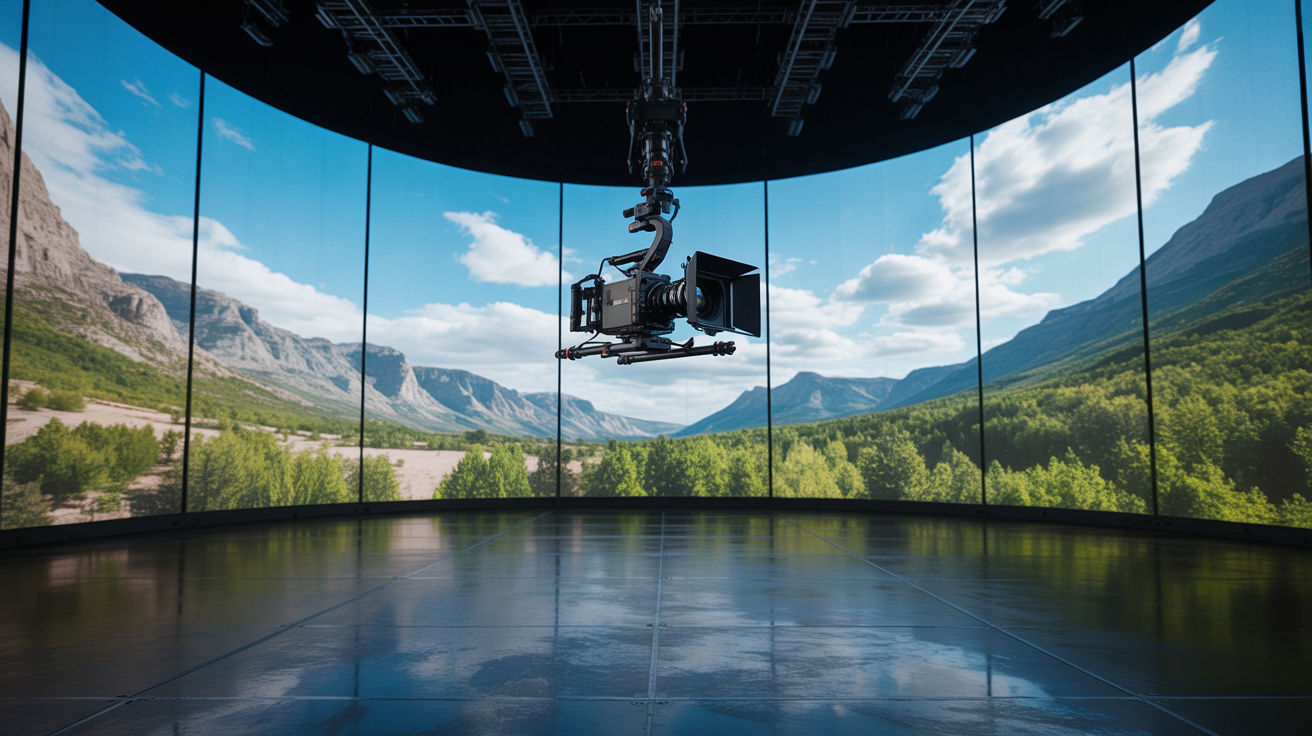
In modern virtual production stages, LED volume walls project real-time game-engine backgrounds while physical actors stand under studio lighting rigs.
The most common point of visual discordance in virtual production is spectral mismatch: the LED wall emits narrow-band RGB phosphors, while the virtual camera shader expects continuous daylight with natural solar spectrum characteristics.
Solar Position & Air Mass (Perez Sky Model)
The path length of sunlight through the atmosphere is parameterized by the Relative Optical Air Mass M(z), which varies with solar zenith angle z:
M(z) \approx \frac{1}{\cos(z) + 0.50572 \cdot (96.07995 - z)^{-1.6364}}
As the sun descends toward the horizon:
M(z)increases from1.0at noon to over38at sunset.- Rayleigh scattering preferentially removes blue and violet photons (
\sim \lambda^{-4}). - The transmitted direct solar beam shifts from 6500K pure daylight to warm 3200K amber, then 2200K deep crimson.
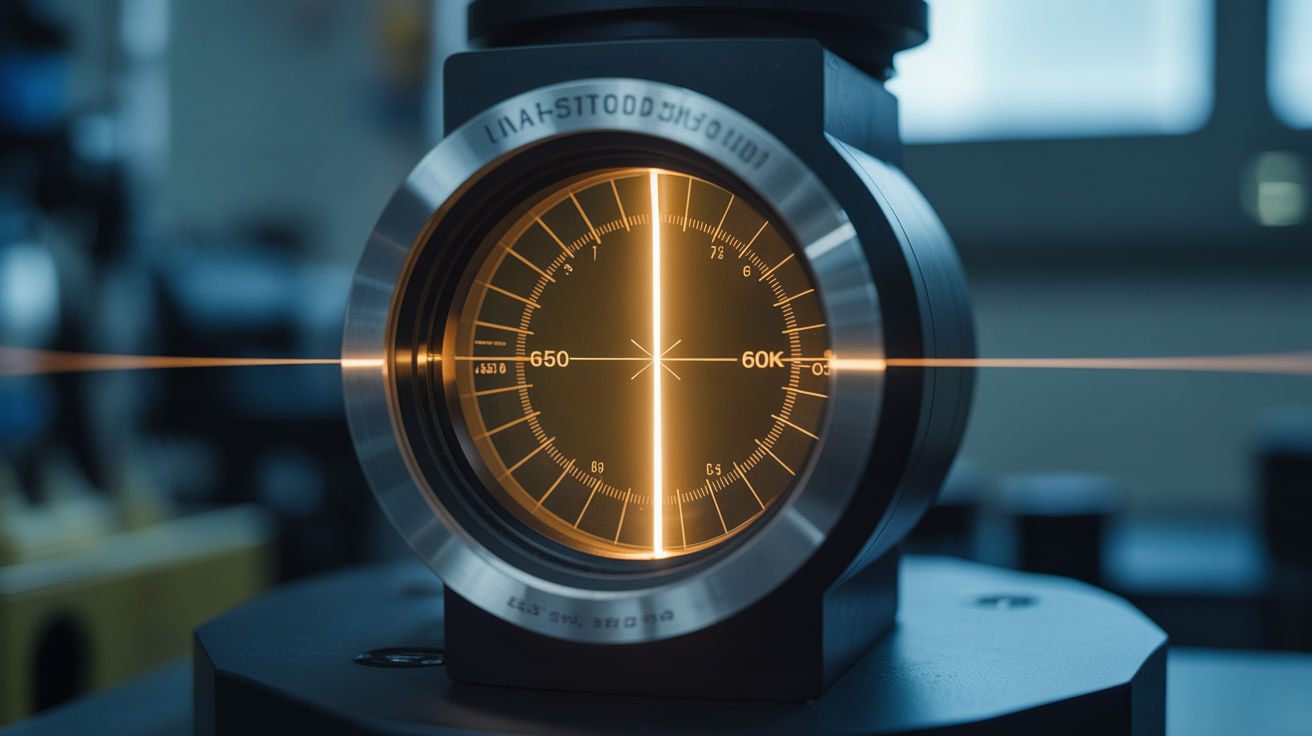
Beyond RGB Tristimulus: Continuous 6500K Solar Illuminant Simulation
Why three arbitrary RGB primaries inevitably fail physical light transport, and how 81-channel spectral power distributions solve metamerism.

Non-Linear Sellmeier Dispersion in Hardware Raytracing
Implementing wavelength-dependent refractive index equations directly inside GPU intersection kernels.
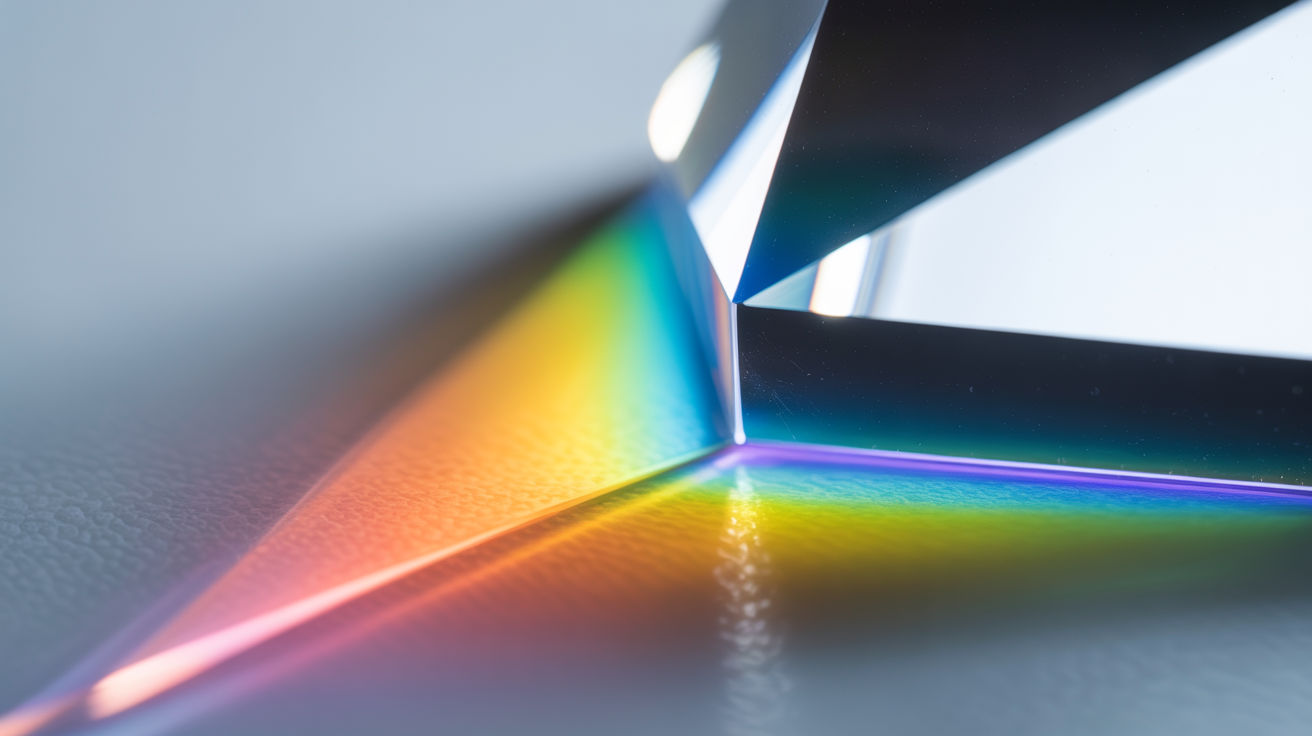
Newton’s Crucial Experiment Recomputed: Crown vs. Dense Flint Prisms
Re-evaluating historical dispersion geometry using contemporary electromagnetic wave propagation and wavefront analysis.